Thursday, April 28, 2011

United Nations-Declaration of Human Rights


United Nations
The Declaration of Human Rights.
What are Human Rights?
Human rights are the rights and freedoms that we all have.
Some human rights are based on our physical needs:
the right to life, food, shelter
Other human rights protect us:
The right to be free from torture, cruel treatment and abuse.
Human rights are also there to ensure we develop to our fullest potential:
The right to education, to work, to participate in your community.
Everybody has human rights it doesn’t matter who you are, where you come from, what language you speak or what religion you belong to. You have a duty to respect the rights of others just as they have a duty to respect yours. NOBODY CAN TAKE YOUR RIGHT AWAY
Human rights were officially recognised as values by the world when the UN was set up.
What is the UN?
©       The UN is an international organisation that was established in 1945 the year the Second World War ended.
©       Its founded hoped it would be able to prevent catastrophes like the holocaust from happening in the future.
©       So promoting human rights became an aim of the UN, along with maintaining international peace and reducing poverty.


The Universal Declaration of Human rights(UDHR)
The UN universal declaration of human rights is the most famous human rights agreement in the world. It contains 30 Human Rights.


Who wrote the UDHR?
The people who wrote it came from Australia, Chilie, China, France, Lebanon and many more countries.

Declaration of Human Rights

Article 17:
Everyone has the right to own property alone as well as in association with others.
 No one shall be arbitrarily deprived of his property.
Translation:
Everyone has right to their own possessions and to a sense of ownership with all possessions and no one’s possessions should be randomly taken away.


Article 22.
  • Everyone, as a member of society, has the right to social security and is entitled to realization, through national effort and international co-operation and in accordance with the organization and resources of each State, of the economic, social and cultural rights indispensable for his dignity and the free development of his personality.
The meaning of this article is explaining that everyone has the right to feel safe and their rights to be respected

Monday, March 21, 2011

Kiribati and Climate Change

What are the issues? What is being done about the issue?
Kiribati is a nation. Kiribati is a coral atoll consisting of 33 islands. Around 100,000 people live there.
The issues:
·         A lot of people in a small space
·         Rising sea levels
·         About 400m wide
·         The average height above sea level is less than 2m
·         The governor is thinking that Kiribati may be the first country to fall victim to climate change, underwater by 2030
·          Global warming is thought to be causing this
·         The crops are hard to grow because of the salt in the ground
·         The storms they get are getting wilder and ruining the island
·         Lack of water is a problem there
·         Storm surges, drought and erosion are three major causes of environmental impact
Things being done:
·         The Government is educating people in Navy Training
·         Australian Government has funded for nurse training


Tackling Tuberculosis
·         300/1000 people on Kiribati with tuberculosis
·         World Health Organisation says that it is an issue if they have 25 people
·         It is spread through coughing.
·         Average number of people in each household is 13
·         4 specialist nurses to go out and help people
·         The nurses are funded by the Australian Governments Aid.
·         They isolate people with tuberculosis for up to 2 months before being transferred to a hospital.
·         Australia is also funding the build of a lab and pharmacy.
·         They are aiming to reduce the numbers by 30%
Kiribati Australian Initiatives
·         Griffith University in Brisbane is where the nurses get their degree
·         Get education so if they need to immigrate they have more chance.
·         Nurses are trained the most because they are needed more world wide.

Wednesday, March 2, 2011

What is the Cycle of Poverty?

The cycle of poverty has been described as a phenomenon where poor families trapped in poverty for generations because they have no or limited access to critical resources, such as:
           ·          Education
           ·          Financial services,
Subsequent generations are also impoverished.
There are multiple cycles of poverty-based on, among other things,
           ·          Economic,
           ·          Social,
           ·          Spiritual and
           ·          Geographical factors
Many cycles overlap or perpetuate new cycles and therefore any attempt to depict the cycle of poverty will be far more simplistic than realistic.
The Figure below shows-in very simplistic terms- how a cycle of poverty related to hunger keeps a person or household poor in one of the world’s developing countries.


8+ Goals
In September 2000, Koffi Annan, former General Secretary of the United Nations, suggested that we could do something to end world poverty worldwide. 189 countries met in New York City and agreed that by September 2015, we can acheive 8 goals towards ending global poverty. The 8 goals are:
  • Eradicate extreme hunger and poverty
  • Acheive universal primary education
  • Promote gender equality and empower women
  • Reduce child mortality
  • Improve maternal health
  • Combat diseases HIV/AIDS, malaria and other
  • Ensure environmental sustainability
  • Develop a global partnership for development

Sunday, February 20, 2011

Key Principle of Catholic Social Teaching


Human Dignity
Belief in the inherent dignity of the human person is the foundation of all Catholic social teaching. Human life is sacred, and the dignity of the human person is the starting point for a moral vision for society.
The principle of human dignity is grounded in the idea that the person is made in the image of God. The person is the clearest reflection of God among us. We are required to honor the human person, to give priority to the person

Community and the Common Good
In a culture driven by excessive individualism, our tradition proclaims that the person is not only sacred but also social. Human dignity can only be realised and protected in the context of relationships with the wider society.
How we organise our society, in economics and politics, in law and policy, directly affects human dignity and the capacity of individuals to grow in community. The obligation to "love our neighbor" has an individual dimension, but it also requires a broader social commitment. Everyone has a responsibility to contribute to the good of the whole society, to the common good.

Rights and Responibilities
Every person has a fundamental right to life and a right to those things required for human decency-starting with food, shelter and clothing, employment, health care, and education.


Option for the Poor and the Vulnerable
A basic moral test of society is how it treats its most vulnerable members. The poor have the most urgent moral claim on the conscience of the nation.
The obligation to evaluate social and economic activity from the viewpoint of the poor and the powerless arises from the radical command to love one's neighbor as one's self.
The option for the poor is an essential part of society's effort to acheive the common good. A healthy community can be acheived only if it's members give special attention to those with special needs, to those who are poor and on the margins of society.


Participation
All people have a right to participate in the economic, political, and cultural life of society. it is fundamental demand of justice and a requirement for human dignity that all people be assured a minimum level of participation in the community.
It is wrong for a person or a group to be excluded un fairly or to be unable to participate in society.

Dignity or Work/Rights of Workers
The economy ust serve the people, not the other way around. All workers have a right to productive work, decent and fair wages and to safe working conditions. They also have a fundamental right to organise and join unions.
People have a right to economic initiative and private property, but these rights have limits. No one is allowed to amass excessive wealth when others lack the basci necessities of life.

Stewardship of Creation
Catholic tradition insists that we show our respect for the Creator by our stewardship of creation. The goods of the earth are gifts from God, intended for the benefit of all.
We humans are not the ultimate owners of these goods, but rather, the temporary stewards. We are intrusted with the responsibility of caring for these gifts and preserving them for future generations.

Global Solidarity
Catholic social teaching proclaims that we are our brothers and sisters keepers, wherever they live. We are one human family, whatever our national, racial, ethnic, economic and ideological differences. Solidarity means that "loving our neighbour" has global dimensions in an interdependent world.
John Paul II has called solidarity a virtue. It is the virtue, he says, by which we demonstrate "a firm and perservering determination to commit oneself to the common good...because we are all really responsible for all."

Constructive Role for Government
Becausewe are social beings, the state is natural to the person. Therefore, the state has a positive moral function. It is an instrument to promote human dignity, protect human rights, and build the common good.
One of the key functions of government is to assisst citizens in fulfiling their responsibility to others in society. Since, in a large and complex society these responsibilities cannot adequately be carried out on a one-to-one basis, citizens need the help of a government in fulfilling these responsibilities and promoting the common good.

Promotion of Peace
Pope John Paul II, "Peace is not just the absence of war. It involves mutual respect and confidence between peoples and nations. It involves collabration and binding agreements."


1.       List the 5 issues social justice aims to cover
5 social justice issues that social justice aims to cover are;
·         Poverty
·         Child Labour
·         Refugees
·         Homelessness
·         Hunger
2.       In your own words explain what is meant by human dignity
Human dignity is believing that everyone is of worth and that have self-respect. Every human is made in God’s image and made by God.
3.       What is meant by a moral vision for society?
Aiming to do well for all levels in society.
4.       Which of the 5 social justices relates to human dignity?
All of the above issues relate to human dignity.
5.       Give an example of a community that you are part of.
Stella Maris College community
6.       How is this community both Sacred and Social?
Stella Maris College is a catholic girl’s school and we uphold the catholic faith. It is social because of our connection with our friends here.
7.       What is the major test of a moral society?
How a community treats their most vulnerable members of society.
8.       In what way does our community look after the poor?
Vinnies, Salvos, Red Cross, World Vision, Caritas, Medicare, soup kitchens, meals on wheels, mission beat and the church.
9.       What are every human’s fundamental rights?
Every human has a fundamental right to life and a right to those things required for human decency-starting with food, shelter and clothing, employment, health care and education.
10.   What is the role of the government in maintaining human rights?
To promote human dignity, protect human right and build the common good.
11.   Who is responsible for assisting the government to achieve its goals?
All people are responsible by voting.


Wednesday, February 9, 2011

A Social Injustice issue task

Our global issue is WATER!
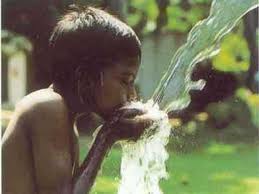
Water is the essence of life; we use water in our day to day lives without it the human race would die out aswell as the millions of animals that inhabit the earth.  Water covers more then 70% of the worlds surface yet many billions of people die every year because they cant get access to fresh drinking water. Some people in the world don’t have easy access to water that is clean and healthy. Water is necessary for sanitation and consumption, without it, it is impossible to survive. Many people, mostly living in developing countries, only have access to dirty water which would be contaminated with germs and diseases.  If people are ill from drinking bad water, they aren’t able to attend work; school etc therefore those people would not be able to make money.
As water becomes scarcer, people begin to start arguments about who gets the water. It is necessary for water to be shared equally and resourcefully otherwise people will not be getting the water they need and or getting extremely sick from the water they are drinking. Natural disasters also affect our water systems in bad ways. Flooding can contaminate the drinking systems or a drought could wipe out the water altogether.
·         1 billion people don’t have safe drinking water
·         2.8 billion Don’t have good sanitation
·         1.8 million People die each year from diarrhoeal dieseses and 90% those people are children under the age of 5!
Australia’s government is trying to target certain problems including this water issue. Their aim is to reduce poverty and raise the living standards in developing countries. The government e:
1)         Water Governance-managing the sustainable use of water
2)         Delivery Systems-improving the efficiency of existing water systems while increasing the access to water and sanitation services.
We can donate to charities such as world vision and caritas who are doing tremendous work in 3rd world countries to try and get water pumps in towns.
We can make people more aware of the challenges that the people that live in 3rd world countries have to face every day.


Water

A summary of the background of the issue:
Some people in the world don’t have easy access to water that is clean and healthy. Water is necessary for sanitation and consumption, without it, it is impossible to survive. Many people, mostly living in developing countries, only have access to dirty water which would be contaminated with germs and diseases.  If people are ill from drinking bad water, they aren’t able to attend work; school etc therefore those people would not be able to make money.
Details about the Issue/why the situation occurs:
As water becomes scarcer, people begin to start arguments about who gets the water. It is necessary for water to be shared equally and resourcefully otherwise people will not be getting the water they need and or getting extremely sick from the water they are drinking. Natural disasters also affect our water systems in bad ways. Flooding can contaminate the drinking systems or a drought could wipe out the water altogether.
What can be done about the issue (who is currently doing something?):
Australia’s government is trying to target certain problems including this water one. Their aim is to reduce poverty and raise the living standards in developing countries. The government e:
1)      Water Governance-managing the sustainable use of water
2)     Delivery Systems-improving the efficiency of existing water systems while increasing the access to water and sanitation services.